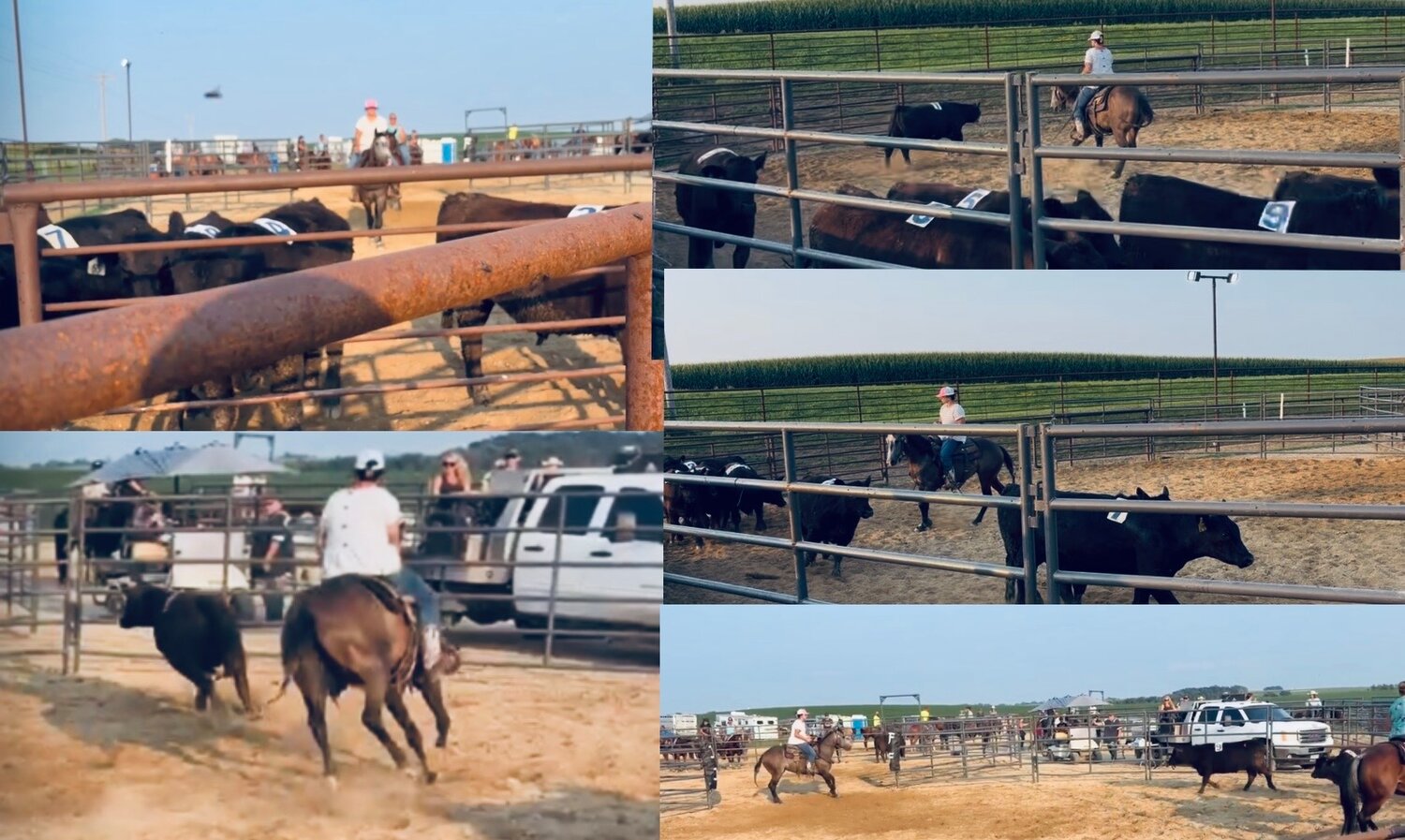
There’s something about learning life from behind the ears of a horse that you can’t learn anywhere else.
There’s no steering wheel, gas pedal, or button you can push to make a horse do exactly what you want. You have to learn to communicate. You have to learn how to feel. You have to learn when to ask and when to simply let the horse do its job.
And then there’s cattle.
Working cattle from horseback is an art. It isn't simply sitting in a saddle and steering. You have to understand the horse underneath you and the cattle in front of you. You learn how a cow moves, where they want to go, and how your horse needs to position itself to move them there.
A shift of your weight.
A turn of the reins.
A change in your horse’s feet.
Sometimes, it's nothing more than putting yourself in the right place at the right time.
Your body controls the horse, and your horse helps control the cattle.
That is where the magic is.
Ranch rodeos, sorting, penning, cutting, and roping have carried pieces of that old Western way of life into today. The equipment may have changed, and the work may look different, but the partnership between horse, rider, and cattle remains.
There is grit in it.
There is patience in it.
And there is a whole lot of humility.
A good horse will teach you that you don't know as much as you think you do. A good cow will humble you even faster.
But that's why I keep coming back.
Because horses aren't just about riding. They're about learning a language without words. They're about trusting something with a mind of its own. They're about getting dusty, getting frustrated, making mistakes, climbing back on, and trying again.
They're about carrying forward a piece of the West that could easily be forgotten.
So, as the combines get ready for another harvest and the fields begin to turn, I find myself appreciating both sides of agriculture—the modern machinery that keeps our farms moving forward and the horses that remind us where we came from.
Maybe that's why, when someone asks me “Why horses?”, I don't have just one answer.
Because no matter how much the world changes, there will always be something worth learning in the saddle.